Why Changing Real Estate Agents Doesn’t Always Fix the Issue
read article
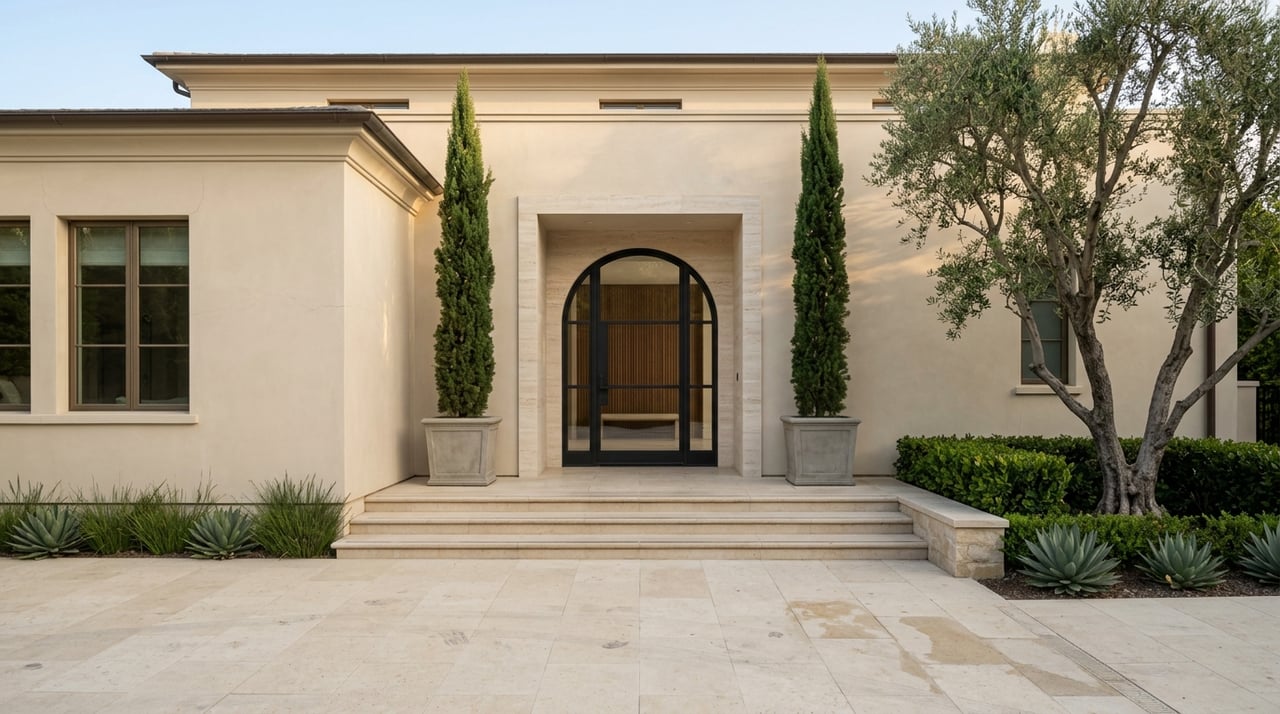
If you picture Beverly Hills as one uniform luxury market, you may miss what really shapes daily life here. In practice, your experience can vary dramatically depending on whether you want walkable convenience, larger lots, architectural identity, or a more private hillside setting. Understanding those tradeoffs can help you choose an address that fits the way you actually want to live. Let’s dive in.
Beverly Hills separates its single-family areas into distinct planning zones, including the Central Area, the Hillside Area, and Trousdale Estates. The city’s housing framework further distinguishes the Central Area north of Santa Monica Boulevard from the Central Area south of Santa Monica Boulevard.
That matters because each area has different lot-size, density, and development standards. For you as a buyer, those rules often translate into meaningful lifestyle differences such as privacy, walkability, views, architectural character, and the overall feel of the street.
The clearest way to choose a Beverly Hills address is to think in terms of tradeoffs. In this market, the decision is often less about price point alone and more about how you want your home to function day to day.
A few of the biggest questions to ask yourself are:
For many buyers, the Central Area north of Santa Monica Boulevard offers the most balanced Beverly Hills experience. It combines classic residential character with practical access to the city’s civic and retail core.
The city sets a 13,000-square-foot minimum lot size and 4 dwelling units per acre in this area. Beverly Hills also applies design review to street-visible exterior changes here, with the goal of preserving neighborhood character, scale and massing, and garden quality.
This part of Beverly Hills is especially appealing if you want a traditional single-family setting that still feels connected to everyday amenities. Its location places you closest to the city’s main civic cluster and some of its best-known shopping and public spaces.
Nearby landmarks include City Hall on North Rexford Drive, the Beverly Hills Public Library, Beverly Cañon Gardens, the Beverly Hills Farmers’ Market on Civic Center Drive every Sunday, and Rodeo Drive’s three-block luxury district with more than 100 international brands. If being able to enjoy cafes, parks, public services, and shopping with less reliance on a car matters to you, this area stands out.
The city’s historic survey describes Beverly Hills domestic architecture as strongly Period Revival overall, with Spanish Colonial Revival especially prominent in the 1920s and 1930s. If you are drawn to classic architecture, landscaped streets, and a more established residential feel, this area often aligns well.
The Central Area south of Santa Monica Boulevard tends to feel more urban and somewhat denser than the area to the north. For some buyers, that is a benefit because it can mean smaller parcels and easier access to mixed-use surroundings.
The city sets a 7,500-square-foot minimum lot size and 6 dwelling units per acre here. Earlier city planning analysis also described this area as having the smallest lot sizes and highest permissible densities in Beverly Hills, with a mix of single-family and multi-family development.
If you want Beverly Hills with a more active, central feel, this area may be a strong match. You may find that the tradeoff is less privacy than in the hills or in larger-lot pockets, but greater convenience and a more urban residential rhythm.
This can be an attractive option if you value access and efficiency over estate-like seclusion. It is often the right fit for buyers who want to stay close to the center of Beverly Hills while prioritizing practicality.
The Hillside Area offers a very different living experience. Here, the emphasis shifts toward privacy, views, and a more estate-like environment.
The city generally places the Hillside Area north of Sunset Boulevard and gives it a 43,560-square-foot minimum lot size and 1 dwelling unit per acre. Beverly Hills also notes that maximum floor area is shaped by topography and buildable area, and hillside standards address landform alteration and view preservation.
If your ideal Beverly Hills home includes a larger parcel, a quieter setting, and a stronger sense of retreat, the Hillside Area may be the right direction. Homes here tend to offer a destination feel rather than an errands-on-foot lifestyle.
Greystone Mansion & Gardens, an 18.3-acre city park on Loma Vista Drive, is a useful point of reference for the area’s atmosphere. The experience here is scenic and elevated, with terraced gardens and basin views that reflect the broader hillside character.
The hills are typically less convenient for routine walking. Daily tasks are more likely to involve driving, and the terrain itself shapes how a property lives.
This area also comes with added wildfire-management considerations. The city’s brush-clearance program states that the north end of the city is in the Very High Fire Hazard Severity Zone, that inspections are conducted annually, and that parking restrictions can be imposed during extreme fire weather. For buyers considering homes north of Sunset Boulevard, those rules are part of the practical decision.
Trousdale Estates is one of Beverly Hills’ most distinct residential identities. It is a separate single-family area north of Doheny Road with its own standards and a highly recognizable architectural legacy.
The current housing element gives Trousdale a 43,560-square-foot minimum lot size, 1 dwelling unit per acre, and a 14-foot dwelling height limit. Beverly Hills also has a dedicated view-restoration process here, including hedge-height rules and a step-by-step system for resolving view impairment from foliage.
Architecturally, Trousdale is closely associated with Mid-Century Modern design. The Los Angeles Conservancy describes it as Beverly Hills’ largest and most complete grouping of custom Mid-Century Modern architecture, with work by architects including Wallace Neff, Paul R. Williams, A. Quincy Jones, Lloyd Wright, Cliff May, and Richard Dorman.
The Conservancy also notes that the homes are predominantly one-story and were shaped to preserve expansive views. If you want a neighborhood with a clear design language and a strong connection between architecture and outlook, Trousdale offers something highly specific.
One of the smartest ways to narrow your search is to decide where you fall on the walkability-versus-privacy spectrum. In Beverly Hills, that one choice can quickly point you toward the right area.
If you want to be close to City Hall, the library, Beverly Cañon Gardens, the farmers’ market, and Rodeo Drive, the Central Area north of Santa Monica Boulevard is usually the strongest fit. If you want larger parcels, more separation, and a home that feels more tucked away, the Hillside Area or Trousdale Estates may be more aligned with your goals.
The Central Area south of Santa Monica Boulevard often lands in a middle position for buyers who prefer a more urban setting. It offers convenience, but with a different density and parcel pattern than the classic residential core to the north.
In Beverly Hills, architectural preference is not just about aesthetics. It often goes hand in hand with lot configuration, neighborhood rhythm, and even local review standards.
If you are drawn to Period Revival homes, landscaped streets, and a more traditional residential setting, the Central Area north of Santa Monica Boulevard may feel like the natural choice. If your preference leans toward iconic Mid-Century Modern design and preserved sightlines, Trousdale Estates becomes a far more targeted search.
The Hillside Area can offer a broad mix of estate living shaped by topography, privacy, and views. That makes it especially important to evaluate not just the home itself, but also the buildable area, access, and how the land affects the property’s long-term usability.
If you want to simplify the process, this framework can help:
The right Beverly Hills address is rarely about a name alone. It is about how a location supports your routine, your design preferences, and the level of privacy or convenience you want from your home.
In a market this nuanced, local knowledge makes a real difference. A polished estate in the flats, a view-driven hillside property, and a classic Trousdale residence may all be in Beverly Hills, but they can serve very different lifestyles. When you understand those differences clearly, you can search with far more confidence and precision.
If you are considering a move in Beverly Hills and want discreet guidance tailored to your goals, Jade Mills Estates offers deep local insight, white-glove representation, and experience across the city’s most important luxury enclaves.