What Defines "Estate Quality" in Holmby Hills and Why It Matters to U...
read article
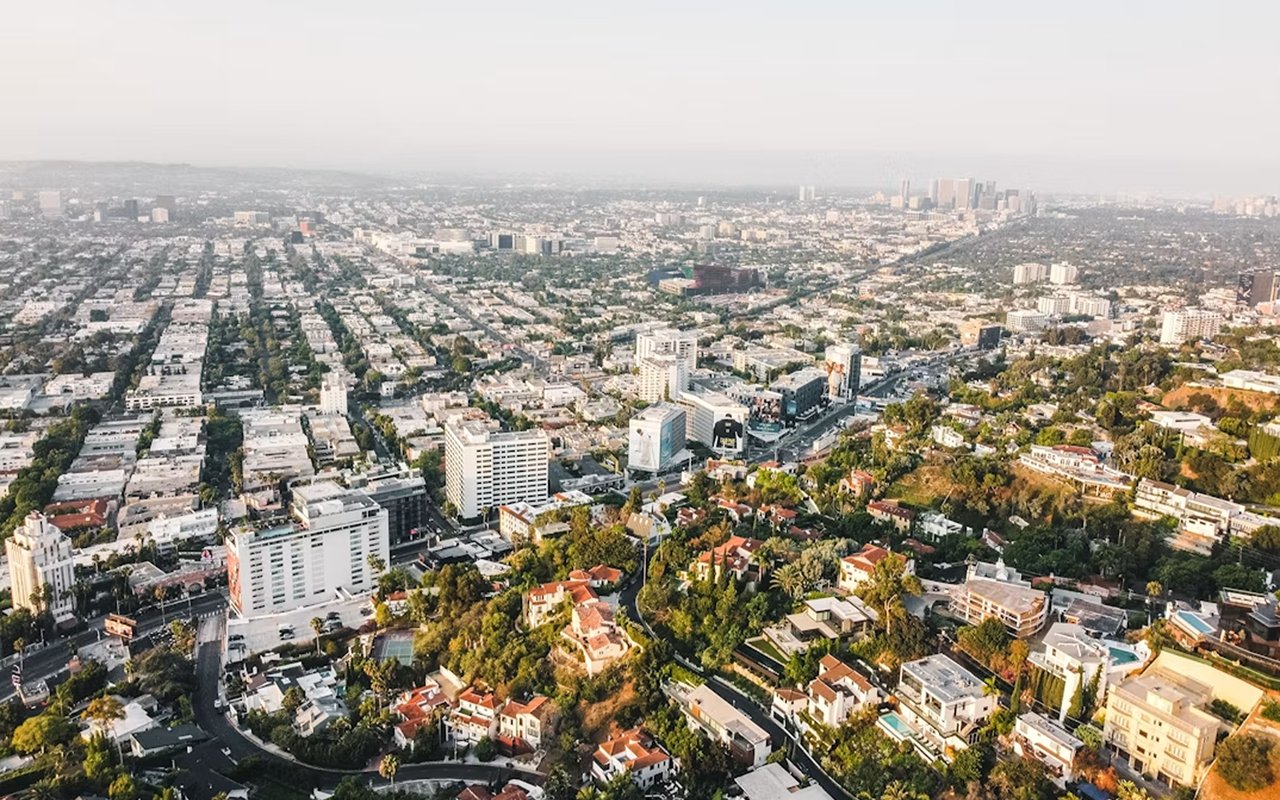
When people talk about Bel Air, they usually mean the whole thing: the sprawling area that stretches from Sunset Boulevard to Mulholland Drive, covering dozens of sub-neighborhoods and thousands of homes. But the people who know this area well make a distinction. Old Bel Air, also called East Gate Bel Air, is the original 128-lot tract that Alphonzo Bell filed in 1923. It's where the community started, and it remains the most sought-after section of one of the most sought-after neighborhoods in Los Angeles. Jade Mills has represented properties along these roads for over three decades, and the character of Old Bel Air is something you understand best by studying how it was built.
In 1922, Alphonzo Bell, an oil millionaire from Santa Fe Springs, purchased approximately 1,700 acres of canyon land on the west side of Los Angeles from the Danzinger family estate. His wife named the property Bel-Air. Bell's ambition was to create what he called "the crowning achievement of suburban development," and he started with a specific piece of the land: 128 lots on Bel Air Road and the five roads that branch from it.
Those five roads, Saint Pierre, Saint Cloud, Bellagio, Copa de Oro, and Nîmes, still define Old Bel Air today. They curve through the canyons north of Sunset Boulevard, shaded by mature trees that Bell himself had imported and planted a century ago. The lots were generous from the start, typically one to five acres, and the roads were built 60 feet wide with underground utilities for water, sewage, electricity, and telephone. In the 1920s, that level of infrastructure was unusual for a residential development. Bell was building for permanence.
The first lot sold in November 1922 for $40,000, roughly $725,000 in today's dollars. Prospective buyers had to submit letters of recommendation and pass a vetting process before they were approved. Bell was selective about who he let in, and that selectivity became part of the neighborhood's identity.
The estates built in Old Bel Air during the 1920s and 1930s were designed by some of the most significant architects working in Southern California at the time. Wallace Neff, Paul R. Williams, Gordon Kaufmann, Roland Coate, and John Byers all contributed homes here. The prevailing styles were Mediterranean Revival, Spanish Colonial Revival, and Tudor Revival, with stucco facades, red tile roofs, arched doorways, and wrought-iron details.
Paul Williams, the first African American member of the American Institute of Architects, designed several homes in the tract. Wallace Neff, whose work defined California residential architecture for a generation, built estates here that have been owned by figures ranging from Judy Garland to Madonna. These weren't houses built from a catalog. They were individual commissions designed for specific clients on specific lots, and that level of intention shows in the way the homes sit on the land.
Many of these original homes still stand. Some have been renovated, some expanded, and some replaced entirely with new construction. But the architectural DNA of Old Bel Air, the scale, the setbacks, the relationship between the houses and the canyon terrain, reflects decisions that were made a hundred years ago.
|
A detail worth knowing Copa de Oro Road, one of the five original streets in Old Bel Air, was named "cup of gold" in Spanish to reflect the wealth of its early residents. In 2015, it was named one of the 15 priciest streets in America, with a median home value above $10 million. |
Old Bel Air is entered through the East Gate, located at the intersection of Sunset Boulevard and Bel Air Road near Beverly Glen Boulevard. The gate has a guard booth and security presence, though the gates themselves don't close or lock. The physical boundary is more symbolic than functional, but the message is clear: this is a private community with its own governance and its own rules.
The Bel-Air Association, a nonprofit established in 1942, oversees the neighborhood's standards, safety, and property values. The Association works with the Bel-Air Patrol, a private security firm that patrols the streets around the clock. The BAA has also been installing security cameras at high-traffic points and entry and exit routes throughout the community. For residents, this infrastructure is part of what defines the neighborhood: a sense of order and privacy that operates independently of the city around it.
The rest of present-day Bel Air developed later. Bell added Stone Canyon, then known as Bel Air Woodland, in 1931, and by 1937 the community extended westward to Sepulveda Boulevard. The West Gate section, entered from Bellagio Road at Sunset, covers much of that later expansion. Understanding the distinction between East Gate and the broader Bel Air matters when you're evaluating properties, because the original tract carries a history and a character that the later sections, while valuable, developed differently.
On November 6, 1961, a brush fire driven by Santa Ana winds tore through the Bel Air hills. The season had been the driest on record. Relative humidity that morning measured below 3% in the Santa Monica Mountains. The fire burned 6,090 acres and destroyed 484 homes, wiping out more than 20% of the neighborhood. Damage exceeded $25 million in 1961 dollars.
The fire reshaped Bel Air in two ways. First, it prompted Los Angeles to enact some of the strictest fire safety regulations in the country, including a ban on wood shingle roofs in new construction and aggressive brush clearance requirements. Second, the homes that were rebuilt often reflected the architectural tastes of the 1960s rather than the 1920s originals, introducing mid-century modern designs into a neighborhood that had been almost entirely period revival.
Much of the West Gate section burned in 1961. Old Bel Air was affected as well, though many of the original estates survived. The fire is part of the neighborhood's history in the same way earthquakes are part of living in California: a reality that informs how properties are built, maintained, and valued.
Bel Air today is generally divided into three areas: East Gate (Old Bel Air), West Gate, and Upper Bel Air. Each has a different character.
|
Area |
Era |
Proximity |
Terrain |
Architecture |
|
East Gate (Old Bel Air) |
1920s–1930s |
Close to Sunset Blvd |
Flat to gentle slopes |
Period revival, mid-century, new builds |
|
West Gate |
1930s–1960s |
Close to Sunset Blvd |
Varied terrain |
Mix of post-fire rebuilds and newer construction |
|
Upper Bel Air |
1950s–present |
5+ min from Sunset |
Steep ridges, canyons |
Contemporary, modern, some mid-century |
Old Bel Air's proximity to Sunset Boulevard is one of its practical advantages. Residents are a short drive from Beverly Hills to the east and the coast to the west. Holmby Hills sits directly adjacent, and together with Beverly Hills, these three neighborhoods form the Platinum Triangle, the most concentrated collection of significant residential properties in Los Angeles.
Homes in Old Bel Air range from original 1920s and 1930s estates to recent ground-up construction. Properties sit on lots of one to five acres, with some exceeding that. Residences range from around 5,000 square feet to well over 20,000. The ZIP code 90077 had a median list price of approximately $6.5 million as of early 2026, though closed sales in Old Bel Air specifically can vary widely depending on the lot, the condition, and the street.
The properties that hold their value tend to share certain traits: flat or gently sloped lots, mature landscaping, motor court access, privacy setbacks, and architectural quality that either honors the neighborhood's original character or adds something genuinely new. Guest houses, detached studios, and ADUs have become increasingly important to buyers in this area.
Bel Air currently has between 130 and 170 active listings across its various enclaves. Because of this higher volume of inventory relative to the pace of sales, the neighborhood currently leans toward a buyer's market, though at this price point, each transaction is individual enough that broad market labels tell only part of the story.
Old Bel Air is a driving neighborhood. There are no sidewalks, by design, and the winding canyon roads discourage foot traffic from outside the community. The tradeoff is space, silence, and a degree of seclusion that is difficult to find this close to the center of Los Angeles.
Homes are set back from the road behind gates, hedges, and mature trees. Most residents describe the neighborhood as remarkably quiet. Owner-occupied homes make up roughly 89% of the housing stock, which contributes to a sense of stability and familiarity among neighbors.
Hotel Bel-Air, the landmark property on Stone Canyon Road, sits within the neighborhood and functions as a gathering place for residents. It's where many people in Old Bel Air host out-of-town guests, celebrate occasions, or simply have dinner without leaving the community. The hotel's restaurant, overseen by Wolfgang Puck's dining group, is open daily.
Considering a home in Old Bel Air? Jade Mills has represented buyers and sellers across Bel Air for over thirty years and knows every road in the original tract. Reach out to start a conversation.