By Jade Mills
For those in search of high-end real estate, the word estate is often used in broad terms to describe any large-scale luxury home or one that occupies a sizable piece of land. Head to the western edges of Los Angeles County, however, including the City of Beverly Hills and ultra-luxe communities such as Bel Air and Holmby Hills, and "estate quality" carries a more exacting definition.
Particularly in
Holmby Hills, the tucked-away enclave bisected by Sunset Boulevard and adjacent to the exclusive Los Angeles County Club, evaluating a residence here involves more than simply counting bedrooms, admiring finishes, or comparing interior square footage. A property here earns its estate-quality bonafides through transcendent architectural integrity, the cohesion between house and land, the caliber of one's arrival, and the splendor of the grounds.
Taken together, estate quality in Holmby Hills is the measure of whether the home possesses the rarity expected of one of Los Angeles' most tightly held neighborhoods. For ultra-high-net-worth buyers, such distinctions affect not only lifestyle, but also long-term desirability, future flexibility, and value.
Key Takeaways
- Estate quality in Holmby Hills begins with the scale, usability, and configuration of the land.
- Architectural pedigree and thoughtful preservation can be more valuable than sheer interior size.
- Setbacks, mature landscaping, buried utilities, and low-density planning are part of the neighborhood's original design.
- Landmark provenance creates a category of ownership that ordinary comparable-sale analysis cannot fully capture.
- Sophisticated buyers should evaluate replacement difficulty, not simply asking price or price per square foot.
A Neighborhood Designed for Estates From the Beginning
Holmby Hills did not gradually evolve into an estate neighborhood. It was planned that way. Its early development was connected to the Janss Investment Company, which helped shape a community of large residential sites, carefully considered streetscapes, and substantial homes. Historic neighborhood planning included large-lot zoning, buried electric and telephone lines, and distinctive streetlamps designed specifically for Holmby Hills.
That original framework still influences what buyers see and feel today.
- Land was treated as an essential part of the residence.
- The public streetscape was deliberately restrained.
- Residential density was intentionally limited.
This history matters because the neighborhood's value is not based solely on the houses standing there today. Much of it resides in the underlying plan. A residence may be remodeled, expanded, or replaced, but the broad streets, generous setbacks, established tree canopy, and scarcity of substantial parcels cannot easily be reproduced elsewhere on the Westside.
Estate Quality Starts With the Land
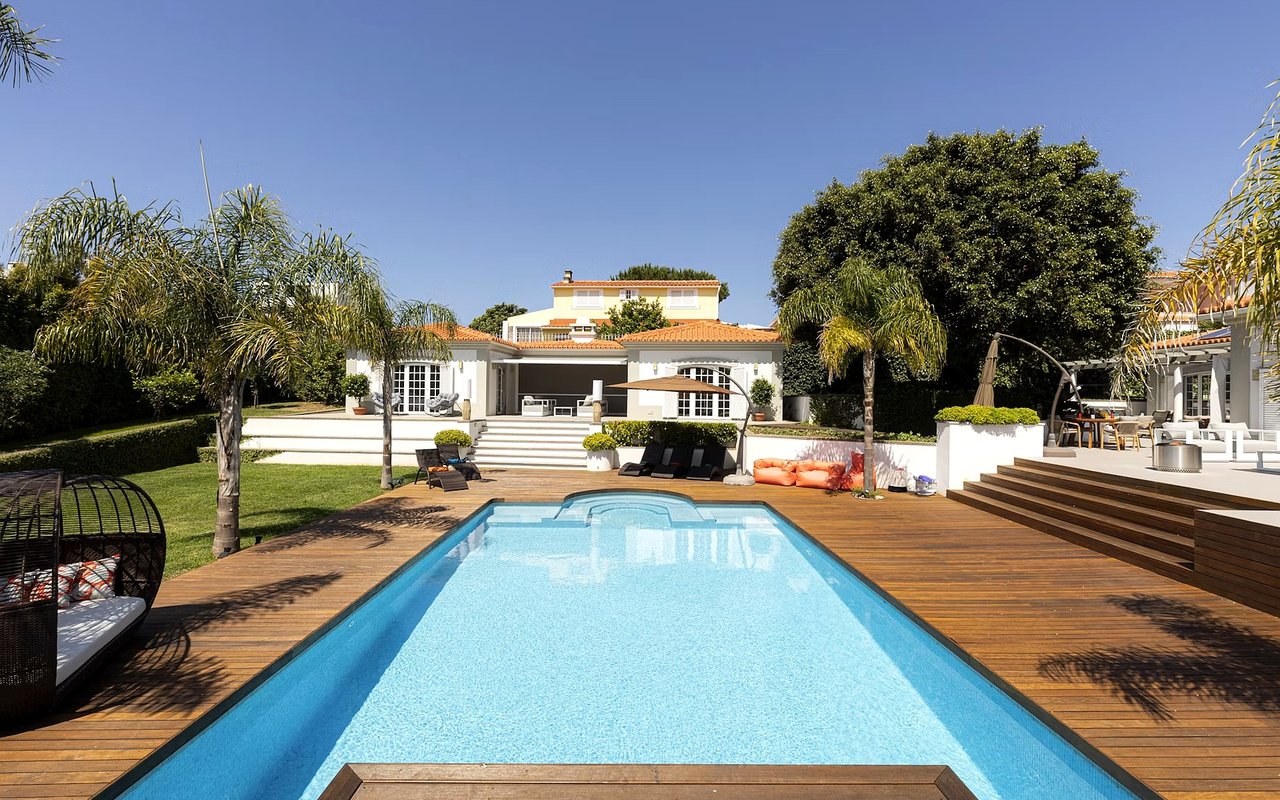
When touring a Holmby Hills property with a client, the grounds often receive equal billing alongside the interiors. A large plot of land does not automatically translate into estate-quality property. The shape, grade, orientation, approach, and usability all matter.
- Usable acreage that can accommodate a variety of outdoor amenities carries greater weight than an oversized plot of mostly fallow land.
- The placement of the house is critical, with balanced setbacks and visual breathing room.
- Mature landscape architecture with established trees, layered hedges, and formal gardens adds real value.
This is why two Holmby Hills homes with similar interior measurements may occupy entirely different market tiers. One may be a large house on a valuable address. The other may provide genuine compounded privacy, whose land, approach, and supporting structures create an experience that is exceptionally difficult to replace.
Architecture, Proportion, and Provenance Matter
The finest Holmby Hills estates possess architectural credibility. That does not require every residence to be historic or designed by a widely known architect, but the architecture should have clarity. The exterior, interiors, grounds, and ancillary buildings should feel as though they belong to the same idea.
- Pedigree can distinguish a residence from its competitors.
- Proportion is more important than spectacle.
- Renovation quality or a sensitive modernization should respect the original house, or, at the very least, preserve character while supporting contemporary living.
Provenance also matters, considering the neighborhood includes such notable properties as The Playboy Mansion, Spelling Manor (The Manor), and Owlwood Estate, and was once the home of the Walt Disney Estate, as well as iconic entertainers that include Michael Jackson, Marilyn Monroe, Elvis Presley, Frank Sinatra, and Barbara Streisand. Of course, architectural recognition, a noteworthy chain of ownership, or a place within the cultural history of Los Angeles alone does not make a home desirable. However, when combined with excellent land and architecture, it can turn a residence into a true trophy property.
Why the Distinction Matters to Ultra-High-Net-Worth Buyers
At the highest end of the market, price per square foot is rarely the best place to begin. The more useful question is: How difficult would this property be to recreate?
- Scarcity is highly specific.
- Future flexibility has meaningful value.
- Location supports an efficient Westside lifestyle.
Fashionable finishes can be changed, and there may be other large homes available in Los Angeles, but few boast Holmby Hills' combined offering of substantial usable land, strong architectural and ownership pedigree, mature grounds, and a well-resolved compound plan. There's also the matter of the neighborhood's coveted location, slotted between Beverly Hills, Bel Air, Century City, and Westwood. Altogether, it's a compelling confluence of must-haves for the most discerning of buyers.
FAQs
Is every large home in Holmby Hills considered estate quality?
No. Size is only one component. A true estate-quality residence should have an appropriate relationship to its lot, a meaningful approach, usable grounds, strong architectural composition, and supporting amenities that do not overwhelm the property. A very large home on a compromised site may not offer the same stature as a more restrained residence on superior land.
Should I prioritize a historic estate or new construction when considering a purchase?
It all depends on your priorities. Historic residences may offer architectural pedigree, mature grounds, and provenance that new construction cannot immediately replicate. Newer homes may provide advanced building systems, layouts amenable to current lifestyles, and contemporary amenities. In either case, I advise clients to focus on design quality, land value, and long-term architectural relevance rather than age alone.
How should an ultra-high-net-worth buyer evaluate pricing in Holmby Hills?
Comparable sales are useful, but they must be interpreted carefully. Lot configuration, street position, architectural importance, condition, provenance, and development potential can create wide differences between what at first glance appear to be similar properties. At this level, valuation requires a property-by-property analysis rather than a neighborhood-wide price-per-square-foot formula.
Discover More of Holmby Hills' Luxurious Lifestyle with Jade Mills
When I describe a Holmby Hills residence as estate quality, I use the term deliberately. I am referring to a property where the land, architecture, grounds, and history work together at an unusually high level. For ultra-high-net-worth buyers, recognizing that combination is essential. The goal is not simply to acquire an impressive home. It is to identify an asset whose defining qualities are scarce, enduring, and extraordinarily difficult to reproduce.
If you're considering an estate-quality home in Holmby Hills,
contact me, Jade Mills, today. I would love the opportunity to help you navigate this extraordinary real estate market and discover the estate property that best aligns with your priorities and long-term plans.