By Jade Mills
For years, the focus on ultra-luxury residential amenity packages centered on scale: larger home theaters, longer (or more adventurous) pools, more elaborate wine rooms, and garages akin to private showrooms. Such features still have appeal, but the most sought-after amenities in today's high-end market, including in
Beverly Hills,
Bel Air, and surrounding
Westside communities, are those that go beyond leisure, hobby, and entertainment, and instead intelligently support daily life. AI, wellness design, and self-sufficient infrastructure are beginning to merge into an understated, yet highly responsive idea of luxury.
Key Takeaways
- The most sophisticated home technology will increasingly operate in the background.
- Wellness is moving beyond a home gym or spa, and integrating into the architecture, lighting, air, water, and acoustics of the residence.
- Solar generation, battery storage, and intelligent energy management are becoming important estate-level infrastructure.
- Buyers should distinguish between useful, serviceable systems and novelty features that may age quickly.
- The most future-ready homes will integrate technology, restoration, and resilience into one coherent design.
AI Will Become Less Visible and More Useful
The smart home of the future does not necessarily look more technological. In fact, it may look considerably less so. Quiet or invisible technology features cleaner interface and controls, sensors, climate systems, lighting, audio, and energy management that are integrated into the architecture rather than added as prominent devices.
- Predictive systems are replacing command-based automation that will learn routines and refine lighting, temperature, shading, ventilation, and energy use according to occupancy and time of day.
- Rooms are proving more personally responsive, and provide lifestyle, ambient, and environmental preferences that adjust automatically on a schedule or for different household members.
- Maintenance is evolving as a more proactive endeavor, with broader, more precise monitoring of a home's internal systems through sensors and AI-supported predictability.
The best technology should make a substantial home easier to inhabit, not turn the owner into its systems administrator, and buyers, or current homeowners considering updating their tech, should not confuse sophistication with complexity. A system that is intuitive, well documented, and supported by established vendors is a far better investment than one that performs dozens of tricks but requires constant specialist attention.
Wellness Is Becoming the Organizing Principle
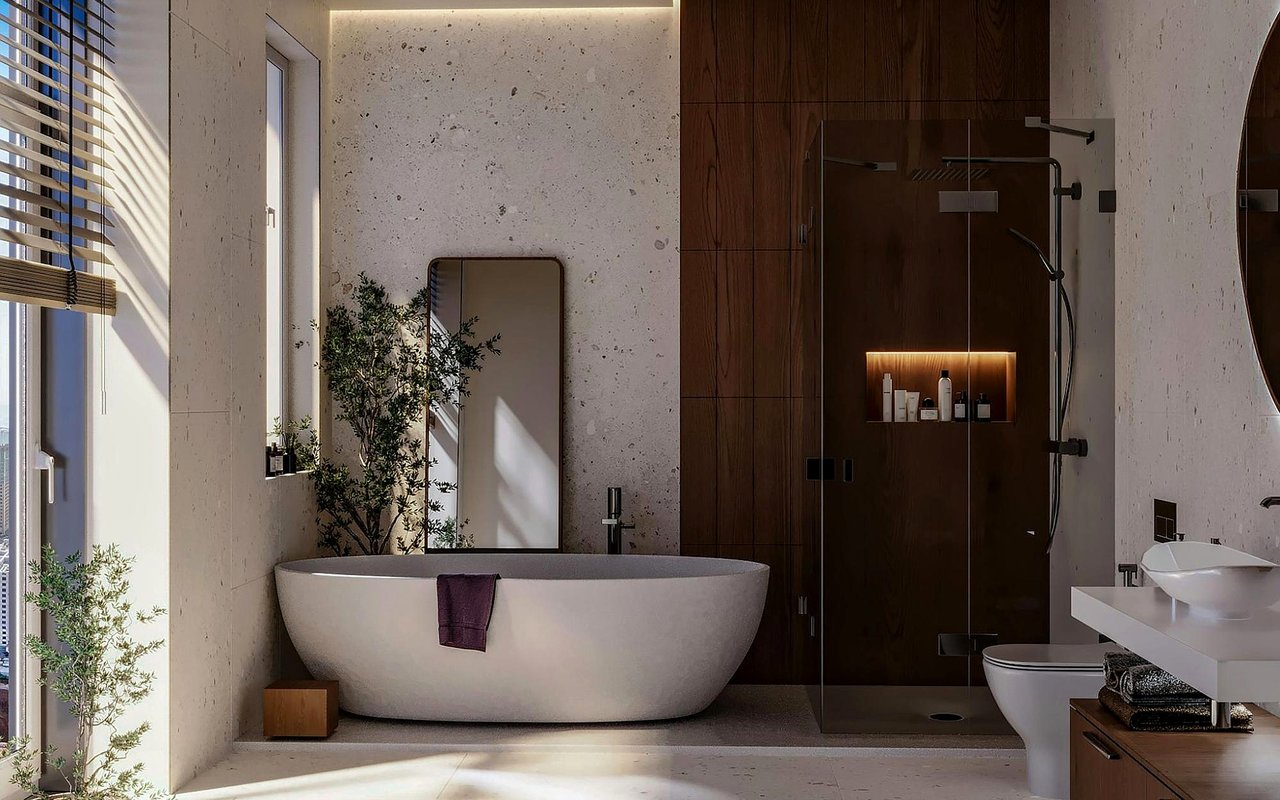
Whether it was a home gym (often a sacrificial den or bedroom), a sauna, or a massage room, traditional luxury homes often "placed" the wellness amenity in designated areas ill-suited to support an owner's wellness goals. Now, today's best designs are taking a broader view. Wellness is increasingly being considered as a vital integration, from the first architectural drawings to influencing how the home handles daylight, air, water, and sound to how it supports sleep, movement, and access to the outdoors.
- Dedicated recovery spaces are becoming more refined, with top-tier construction increasingly including some combination of infrared saunas, steam rooms, cold plunges, treatment rooms, meditation spaces, and optimally designed fitness studios.
- Circadian lighting is moving into the whole house, with the ability to tune lighting tone and intensity throughout the day.
- Air, water, and acoustics are emerging as genuine luxury specifications, with whole-home filtration, climate management, and room-specific acoustic treatments carrying a greater impact on daily experience.
Though the wellness-real-estate sector continues to expand, the more meaningful trend is toward integrated wellness. In Beverly Hills, this approach fits naturally with indoor-outdoor architecture. Mature gardens, courtyards, shaded terraces, natural ventilation, and rooms oriented toward greenery can all support restoration without making the residence feel like a clinical retreat. To me, that balance matters. A home should promote well-being while still feeling personal, warm, and beautifully residential.
Self-Sufficiency Will Become a Hallmark of Thoughtful Estate Design
Self-sufficiency in an ultra-luxury home does not need to mean complete separation from public infrastructure. More often, it means reducing dependence on any single system and giving the owner greater control over how the estate operates.
- Solar and battery storage work as a coordinated system with solar energy retention for evening use and ample backup power available when the grid is interrupted.
- Energy management will become more selective in the near future with the ability to prioritize essential systems, communications, climate zones, and medical or office equipment versus operating the entire estate indiscriminately.
- Food and landscape systems will become more purposefully integrated, transforming an estate into a productive asset with greenhouses, raised gardens, orchards, composting systems, and efficient irrigation while maintaining showcase landscape architecture.
New California residential standards increasingly anticipate future battery-ready electrical design, while water management continues proving a vital topic, particularly on larger Southern California properties. Smart irrigation, soil-moisture monitoring, drought-conscious planting, greywater strategies where permitted, and appropriately scaled storage can reduce unnecessary consumption. These systems may not be as visually dramatic as a screening room, but they can make a large estate more efficient and easier to operate over time.
The Best Amenities Will Work Together
AI, wellness, and self-sufficiency should not be treated as three unrelated categories. In a genuinely forward-looking home, one reinforces the other.
- AI can manage energy without compromising comfort.
- Wellness systems can respond to real-time environmental conditions.
- Resilient infrastructure can operate discreetly within the home's architecture.
This is where good planning becomes essential. A collection of individually impressive features does not automatically create a future-ready residence. The wiring, mechanical systems, network architecture, equipment access, software platforms, and service arrangements must be considered together.
I also encourage buyers to think about technology ownership. Who controls the data? Can the home operate locally if an outside cloud service is unavailable? Are replacement components proprietary? Is there a clear manual, vendor list, and maintenance schedule? Critical questions that are as important as the brand of appliance selected for the kitchen.
FAQs
Which future-focused amenity is most likely to add lasting value?
Whole-home infrastructure generally has the broadest long-term appeal. High-quality air and water systems, thoughtful lighting, solar paired with battery storage, reliable networking, and flexible wellness rooms can benefit many types of buyers. Highly specialized equipment may be valuable to the right owner but should be designed so the space can be adapted later.
Can an existing Beverly Hills home be upgraded with these systems?
Often, yes, although the cost and practicality depend on the residence. Battery storage, filtration, lighting controls, energy monitoring, and selected wellness features can frequently be added during a substantial renovation. Deep integration is usually easier in new construction, especially when mechanical rooms, wiring pathways, ventilation, and structural loads are planned from the beginning.
Will AI make luxury homes more complicated or frustrating to operate?
Poorly designed AI systems can. Well-designed systems should do the opposite. I look for technology that offers simple manual controls, clear owner settings, local operating capability, and dependable professional support. The goal is graceful automation, not dependence on a confusing interface.
Discover More of Beverly Hills' Luxurious Lifestyle with Jade Mills
The future of ultra-luxury amenities will not be defined by a single must-have room or dramatic piece of equipment. It will be defined by how calmly and intelligently the entire residence performs. The most luxurious and technologically advanced homes will anticipate their owners' preferences, support restoration throughout the day, and maintain essential functions with less reliance on outside systems.
If you're considering an ultra-luxury home with future-facing amenities in Beverly Hills, Bel Air, Holmby Hills, or another premier Westside Los Angeles estate market,
contact me, Jade Mills, today. I would love the opportunity to help you navigate this extraordinary real estate market and find your ideal home featuring the next era of high-end living.