Why Certain Streets in Beverly Hills Command a Premium
read article
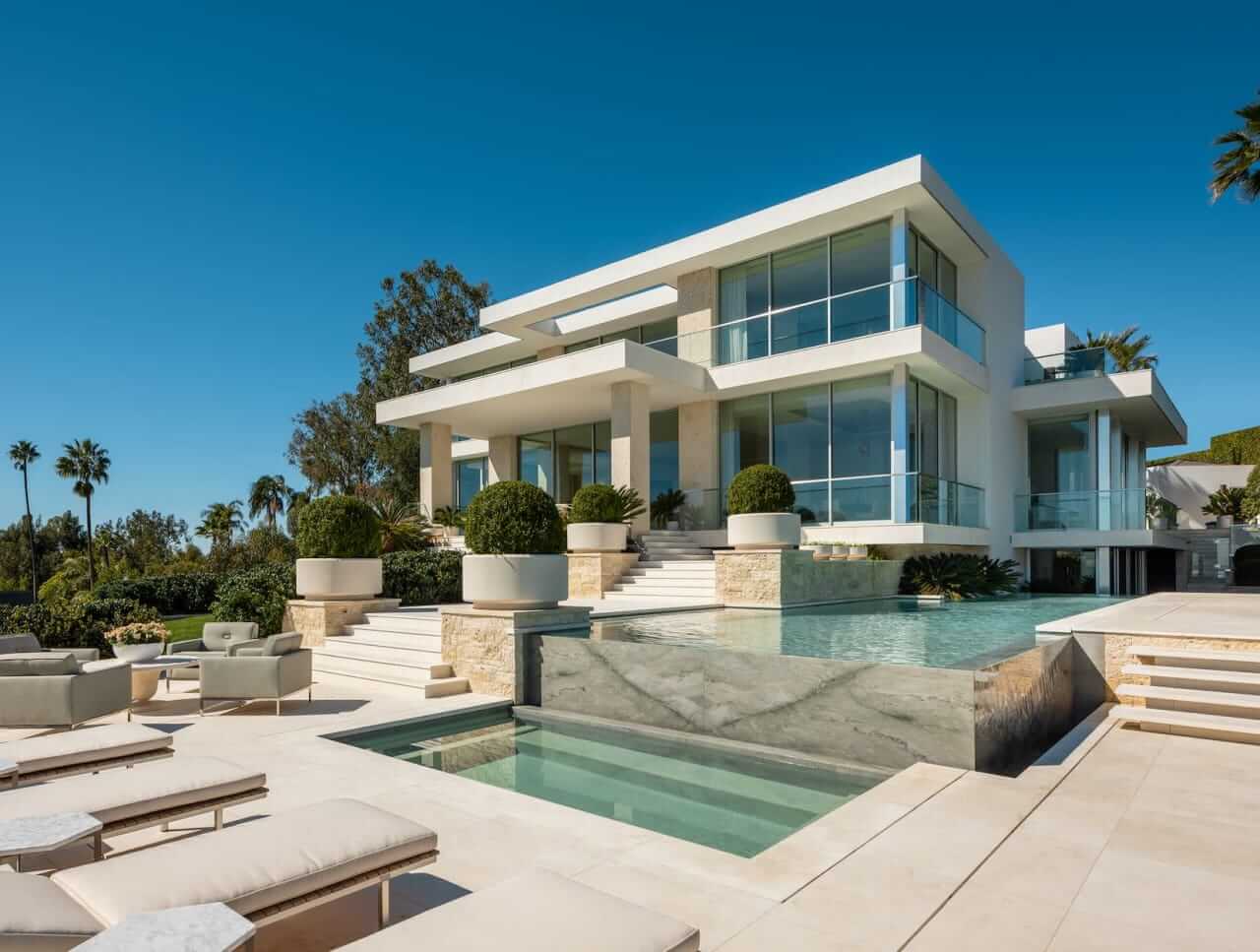
The Beverly Hills luxury market has never stood still, and 2026 is no exception. Jade Mills, the #1 agent worldwide for Coldwell Banker with more than $9 billion in career sales, has spent over four decades representing buyers and sellers in this city. She’s watched trends come and go. But this year feels different. The shifts happening right now aren’t surface-level. They’re redefining what a luxury home means, who’s buying, and what those buyers expect from every square foot.
According to Redfin, Beverly Hills home prices reached a median of $4.42 million in early 2026, with properties averaging 62 to 74 days on market depending on the sub-neighborhood. Meanwhile, the Coldwell Banker Global Luxury 2026 Trend Report shows luxury single-family listings up 14% year-over-year nationally. This is a market that rewards preparation and punishes guesswork, and the buyers today are more informed, more intentional, and more specific about what they want.
The Beverly Hills luxury market in 2026 is stable but selective. According to the California Association of Realtors, statewide home prices are projected to appreciate approximately 3.6% this year, and premium Westside zip codes are tracking in that range. The Coldwell Banker Global Luxury report confirms that national luxury home sales rose 4% in 2025, with single-family luxury prices up 3% year-over-year.
The story underneath those numbers matters more. According to Redfin, well-priced homes in the right Beverly Hills neighborhoods are achieving between 95% and 97% of their asking price, while overpriced listings sit well beyond 90 days. The market is bifurcated by price tier, and understanding where a property falls changes everything about strategy.
|
Price Tier |
Buyer Profile |
Market Conditions |
|
Under $3.5M |
Local trade-up buyers, first-time luxury |
Brisk; multiple offers common |
|
$3.5M–$7M |
International purchasers, second-home buyers |
Consistent price achievement |
|
$7M–$25M |
UHNW individuals, entertainment industry |
Architectural significance commands premiums |
|
$25M+ |
Global ultra-luxury, legacy buyers |
Selective; 4–6 month cycles for spec homes |
|
Local Insight: According to the National Association of Realtors, foreign buyers purchased $56 billion in U.S. residential real estate in 2025, a 33% increase year-over-year, with 78,100 properties sold to international buyers. For sellers in Beverly Hills, this underscores why marketing reach needs to be global, not local. |
One of the most significant forces reshaping this market isn’t a design trend or a technology. It’s generational wealth. According to the Coldwell Banker Global Luxury 2026 Trend Report, Gen X and Millennials are set to inherit $2.4 trillion in U.S. real estate wealth over the next decade, representing 52% of the $4.6 trillion global real estate wealth transfer expected during that period.
For Beverly Hills, that means a new wave of well-capitalized buyers who pay cash, move quickly, and have very clear expectations. These aren’t speculative purchasers. They’re families looking for multigenerational layouts, flexible spaces, and homes that reflect how they actually live.
Buyers consistently ask about three things: privacy, wellness features, and whether the home can accommodate aging parents and young children under one roof. That last point would have been unusual a decade ago. Today it’s practically standard.
After years of cool grays and stark minimalism, the pendulum has swung. The homes commanding the highest prices in Los Angeles neighborhoods share a common thread: they feel warm, crafted, and intentional.
According to Houzz’s 2026 Home Design Trends report, the dominant palette has shifted to soft beiges, muted greens, earthy reds, and deep browns. Matte finishes are everywhere, from appliances to bathroom fixtures. Unlacquered brass, brushed bronze, and pewter hardware that develops patina over time is replacing the polished chrome of five years ago. The design world is calling 2026 “the year of matte.”
Buyers are gravitating toward honed marble with visible veining, limestone with fossil inclusions, and reclaimed woods from historic buildings. As Dezeen noted in its 2026 interior design forecast, the industry is shifting toward “curated calm over superficial opulence.” Handcrafted tiles with organic variation and plaster walls that diffuse light are replacing the precision-perfect surfaces that dominated the last decade. The common denominator is authenticity.
Ceilings have become a design statement. Architects are treating them as canvases for bold creativity, from dramatic lighting installations that double as art to structural treatments that add dimension. In a market where buyers have seen everything, the ceiling is often the first thing that makes a home feel original.
Wellness has moved from a premium add-on to a baseline expectation in Beverly Hills luxury homes. Today’s buyers aren’t asking if a home has wellness features. They’re evaluating which ones. Circadian lighting systems that adjust color temperature throughout the day, integrated spa amenities with intelligent showers and tubs, advanced air and water purification, and automated indoor gardens are all becoming standard.
Outdoors, the same philosophy applies. Luxury properties are adding cold plunge pools, infrared saunas, open-air yoga decks, and sensory gardens filled with aromatic herbs and calming water features. The outdoor space isn’t a backyard anymore. It’s a wellness retreat.
Biophilic design is the driving principle. Retractable glass walls, heated floors on patios, and pergolas with adjustable louvered roofs erase the boundary between interior and exterior living.
Regenerative landscaping is gaining traction: drought-resistant native plantings, permeable pavers, and soil restoration practices that actually improve the ecosystem rather than just maintaining it.
Smart outdoor automation ties it all together. AI-driven irrigation systems analyze soil moisture and weather data. Lighting, water features, and security systems are controlled from a single app.
The paradox of technology in today’s luxury market is that the most sophisticated homes are the ones where the technology is invisible. Motorized shades that disappear into ceiling reveals. Whole-home audio systems embedded in walls. Climate systems that respond to occupancy patterns without a visible thermostat. The goal is seamless, invisible integration.
Energy efficiency is also commanding a measurable premium. According to Zillow, homes with solar panels sell for approximately 4.1% more than comparable homes without them. The National Association of Realtors reports that 58% of agents say energy-efficient features add meaningful value to listings. Real-time energy monitoring, advanced water-use tracking, and solar integration are no longer selling points. They’re expected.
Privacy isn’t a preference. It’s a requirement. The security features in today’s gated communities and private estates have advanced significantly. Biometric authentication, including fingerprint, facial recognition, and palm vein scanning, is replacing traditional key systems. AI-powered surveillance learns behavioral patterns and responds to anomalies in real time.
Sustainability in luxury real estate has moved well beyond solar panels on the roof. Net-zero energy homes and passive house design are becoming the gold standard. Buyers are looking for homes built with eco-friendly principles from the ground up, not retrofitted after the fact.
The “slow design” movement, which Dezeen identifies as one of 2026’s defining interior trends, emphasizes intentional, sustainable choices that prioritize craftsmanship and longevity. Reclaimed woods, eco-conscious finishes, and natural stone celebrated for its imperfections are resonating with today’s most discerning buyers. The days of disposable luxury are over.
Not all of Beverly Hills moves at the same pace. Here’s where buyer activity is strongest and the most interesting developments are taking shape:
According to the City of Beverly Hills, updated ADU regulations now allow accessory dwelling units in most residential zones. One ADU is permitted by right, and an additional ADU is available through the city’s Incentive ADU Program on lots of 13,000 square feet or more. For buyers considering multigenerational layouts, this opens up meaningful flexibility.
For those looking in the hillside areas, it’s worth noting that Beverly Hills applies different single-family development standards depending on location. The city’s zoning code governs everything from maximum building height and floor area to setbacks and view preservation, and the rules vary significantly by neighborhood. Knowledge of these details can save buyers months of planning headaches.
The through line in every trend outlined above is intentionality. Today’s Beverly Hills buyer is not interested in luxury for its own sake. They want homes that are thoughtfully designed, sustainably built, technologically seamless, and genuinely comfortable. They want spaces that serve how they live, not just how they entertain.
Knowledge is king. The more buyers and sellers understand about where this market is heading, the better positioned they are to make decisions they’ll be proud of a decade from now. Study the market. Ask the hard questions. And work with someone who will always tell you the truth, even when it stings.
According to Redfin, the median sale price in Beverly Hills reached $4.42 million in early 2026. Zillow’s broader estimate, which includes condos and all property types, places the typical home value at approximately $3.58 million. The luxury market is heavily segmented: single-family estates in prime locations trade well above these medians, while condos along the Wilshire Corridor tend to fall below.
Very much so. According to the National Association of Realtors, foreign buyers purchased $56 billion in U.S. residential real estate in 2025, representing a 33% increase from the prior year. Key source markets include Canada, China, the Middle East, and Europe.
Wellness amenities, energy efficiency, invisible smart home integration, and biophilic design are the features driving the highest premiums. According to Zillow, solar-equipped homes sell for approximately 4.1% more than comparable properties. The National Association of Realtors reports that 58% of agents cite energy-efficient features as adding meaningful value.
According to Redfin, the average days on market in Beverly Hills ranges from 62 to 74 days as of early 2026, depending on the sub-neighborhood. Well-priced homes in the Flats and Trousdale move at the faster end of that range, while overpriced listings can sit for 90 days or longer.
With luxury inventory up 14% year-over-year nationally and the California Association of Realtors projecting 3.6% price appreciation statewide, 2026 offers more selection and less competition than the scarcity-driven market of 2023–2024. Browse current listings to see what’s available.
Have questions about where the Beverly Hills market is heading? Jade Mills has represented buyers and sellers in Beverly Hills for over four decades, with more than $9 billion in career sales. Whether you’re considering your first purchase or your next legacy property, reach out to start the conversation.
Sources
Redfin — Beverly Hills Housing Market (redfin.com)
Zillow — Beverly Hills Home Values (zillow.com)
Realtor.com — Beverly Hills Market Trends (realtor.com)
Coldwell Banker Global Luxury — 2026 Trend Report (coldwellbankerluxury.com)
National Association of Realtors — 2025 Profile of International Transactions (nar.realtor)
National Association of Realtors — 2025 Residential Sustainability Report (nar.realtor)
California Association of Realtors — 2026 Housing Market Forecast (car.org)
Zillow Research — Solar Panel Home Value Premium (zillow.com/research)
Houzz — 25 Home Design Trends Defining How We’ll Live in 2026 (houzz.com)
Dezeen — Interior Design Trends 2026 (dezeen.com)
City of Beverly Hills — Accessory Dwelling Units (beverlyhills.org)
City of Beverly Hills — Single-Family Regulations & Zoning Code (beverlyhills.org)
Zillow — Trousdale Estates, Beverly Hills Listings (zillow.com)
Blog was updated in April 2026